We Ranked India’s Top Café Cities And Mumbai Is Definitely Going To Fight Us For This
6 min read
Authored By
JAJayant Singh
@jayant
Many Indian Safaris. But only few good. But I confused; which good? Don't worry me tell you.
Indian safaris are basically the only vacations where people willingly wake up at 4:30 AM, sit in freezing jeeps, eat Parle-G biscuits, and still call it “the best experience of my life.”
And honestly, fair hai yaaar.
Because the moment a forest suddenly goes silent, your guide raises his hand dramatically, and a tiger casually walks out of the trees like it pays rent there, your brain forgets every uncomfortable thing that happened before that!
But here is the problem with most safari guides online; they rank parks like everybody wants the same thing.
Not true, jaanemans!
Some people want guaranteed tiger sightings, some want cinematic landscapes, some want peaceful forests without twenty jeeps chasing one animal like paparazzi outside Mannat. And some just want to feel like they are inside a National Geographic documentary without selling a kidney for a safari lodge.
So here is the real ranking of India’s major national parks based on what people actually want from a safari.
If your entire safari personality is “I just need to see one tiger and my life is complete,” Bandhavgarh is your place.
This park has built an almost unfair reputation for tiger sightings over the years. The density of tigers here is among the highest in India, especially around the Tala zone, which has become legendary among wildlife photographers and safari guides.
Unlike some forests where visibility feels impossible, Bandhavgarh gives you open meadows, bamboo forests, rocky hills, and relatively accessible terrain. That means sightings here often feel dramatic and close instead of being distant orange blurs hidden behind thirty trees.
And the tigers here genuinely behave like celebrities who know they are famous.
People regularly spot them walking confidently on roads, crossing tracks in broad daylight, or resting near waterholes while safari vehicles lose their minds nearby.
However, Bandhavgarh also comes with one major issue: overtourism.
During peak season, the park can become extremely crowded. Multiple safari vehicles often gather around sightings within minutes, and the whole experience can occasionally feel less like wildlife tourism and more like a jungle traffic jam.
Still, if this is your first safari and your biggest fear is coming back without seeing a tiger, Bandhavgarh remains one of the safest bets in India.
Tadoba feels like the cool underground artist of Indian safaris that suddenly everybody discovered.
Unlike the luxury vibe of some famous parks, Tadoba still feels rugged, unpredictable, and properly wild. The forests are hotter, dustier, and less commercial, which strangely makes the experience even better.
This is also why serious wildlife travellers love it so much.
Tadoba’s tigers are known for being unusually bold. Safari stories from the reserve often involve tigers casually walking on roads, sitting near lakes, or appearing in broad daylight with absolutely zero concern for human attention.
The reserve has also improved dramatically over the years because even the buffer zones now produce strong wildlife sightings. That means your chances of seeing activity are high across multiple safari routes.
What really makes Tadoba special, though, is the atmosphere.
The dry teak forests glow golden during sunrise and sunset. And unlike parks where everything depends on tiger sightings alone, Tadoba gives excellent chances of spotting sloth bears, leopards, wild dogs, gaurs, crocodiles, and rich birdlife as well.
Jungle jungle baat chali hai pata chala hai, koi na koi dikhna toh aapki kismat hi likha hai!
So yeah, if Bandhavgarh feels like a blockbuster wildlife movie, Tadoba feels like the critically acclaimed film people cannot stop recommending to you.
Ranthambore is the main character of Indian safaris and it knows it.
This is the park where you can literally watch a tiger walk past ancient ruins while peacocks scream dramatically in the background and the sunset turns the entire forest orange.
Everything about Ranthambore feels larger than life.
The reserve combines dry forests, giant lakes, massive banyan trees, fort walls, temples, and rocky landscapes in a way that almost looks unreal. Even people who are not hardcore wildlife enthusiasts end up loving Ranthambore because visually, the park is spectacular.
Tiger sightings here are also relatively beginner-friendly because the terrain is more open than heavily forested reserves like Kanha or Corbett.
However, Ranthambore has become extremely mainstream over the past few years.
Luxury tourism has exploded around the reserve. Influencers regularly visit for “jungle-core” content, Safari bookings disappear quickly during peak months, and sometimes the excitement around tiger sightings becomes so chaotic that it feels like everybody collectively forgot basic forest etiquette.
Still, when Ranthambore delivers a sighting, it feels unforgettable. Very few places in India combine wildlife, history, and visual drama this well.
Kanha is for people who romanticise forests more than tiger sightings. This park does not hoard attention the way Bandhavgarh or Ranthambore do. Instead, it subtly makes you fall in love with the jungle itself.
Everything here feels strangely peaceful!
Morning mist hangs over giant grasslands while the sunlight filters softly through sal forests.
It is not surprising that Kanha inspired parts of The Jungle Book because the entire landscape genuinely feels magical at times.
Tiger sightings are still strong here, but Kanha’s biggest strength is the overall ecosystem experience. The forest feels immersive instead of rushed. You notice birds, trees, sounds, and small wildlife instead of spending every second aggressively searching for stripes.
Kanha is especially perfect for photographers, birdwatchers, families, and travellers who actually enjoy nature beyond the idea of ticking a tiger sighting off a bucket list.
Kaziranga feels completely different from most Indian safari parks.
While central Indian reserves often revolve around the suspense of tiger tracking, Kaziranga overwhelms you with visible wildlife almost immediately.
The landscape here is made up of floodplains, wetlands, and giant grasslands, which means animals are constantly visible throughout the safari.
And there are a lot of them! WOAH!
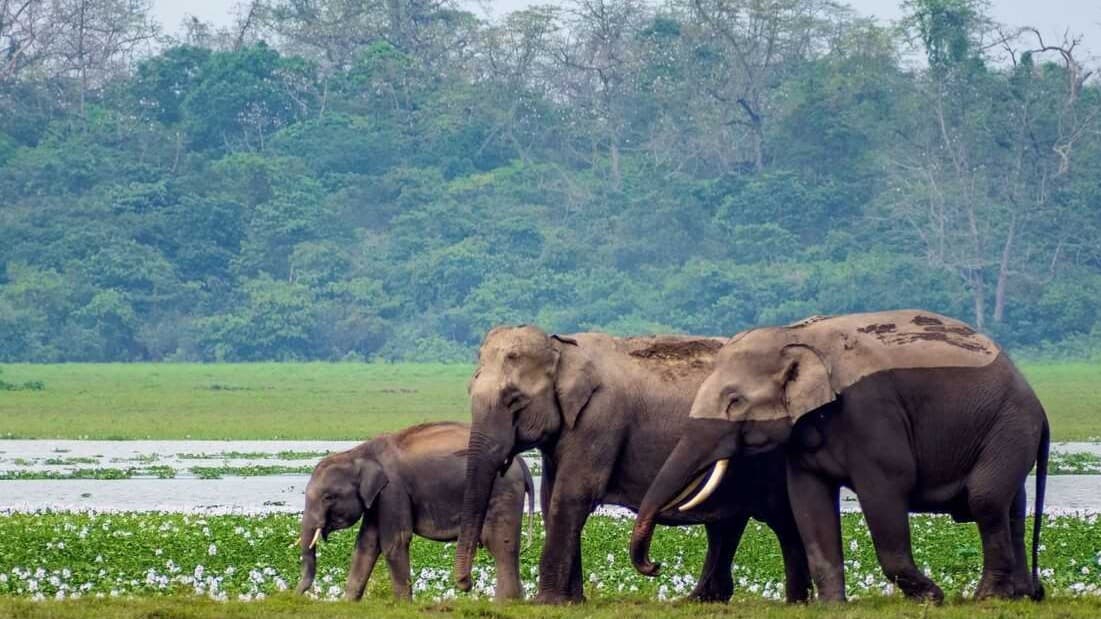
You can spot one-horned rhinos, wild elephants, swamp deer, water buffalo, massive birds, and several other species within a single drive. At times, the reserve feels closer to an African-style safari than a traditional Indian jungle experience.
The rhinos are especially unforgettable. Seeing one emerge slowly from tall elephant grass feels prehistoric and “phat ke haath me aana” in the best possible way.
If you are the kind of traveller who wants constant action instead of hours of suspense, Kaziranga is unbeatable.
Satpura is the safari equivalent of “if you know, you know.”
Unlike most reserves that mainly focus on jeep safaris, Satpura offers walking safaris, canoe safaris, boat safaris, and night experiences as well.
That completely changes the energy of the trip.
Instead of racing through forests following wireless updates about tiger movements, you start paying attention to the jungle itself. You notice alarm calls, footprints, movement in trees, and sounds coming from riverbanks.
The experience feels immersive in a way many mainstream safari parks no longer do.
And interestingly, many experienced wildlife travellers say Satpura gave them their best overall safari experience even without nonstop tiger sightings.
Because sometimes the most unforgettable jungle moment is not seeing a tiger; sometimes it is the exact second the forest suddenly becomes silent and everybody in the jeep instinctively knows something is nearby.
That feeling stays with you long after the safari ends.
Honestly, there is no single answer because the “best” safari depends entirely on what kind of traveller you are.
If you want tiger sightings above everything else, choose Bandhavgarh. If you want a rugged and less commercial jungle experience, choose Tadoba.
If you want dramatic landscapes and cinematic wildlife moments, choose Ranthambore. If you want beautiful forests and peaceful immersion, choose Kanha.
If you want nonstop wildlife activity, choose Kaziranga.
Because eventually, every safari traveller realises the same thing. The best part of the jungle is not just the animal you came to see, it is the anticipation before it appears.
Toodlesss.
Co-Authored By
6 min read
6 min read

5 min read