
The Steroid Problem In Indian Gyms Is No Longer “Hidden,” It’s Basically Gym Culture Now
5 min read
Authored By
JAJayant Singh
@jayant
You sit potato all day, try more hilna-dulna typa work
If corporate India had a theme song right now, it would probably be “Baithe Baithe Kya Karein” playing softly in the background while everyone stares at spreadsheets for nine hours straight. Because let’s be honest. Between endless Zoom calls, Swiggy lunches, back-to-back deadlines, and commutes that feel longer than some relationships, most office workers today are sitting more than ever before. And suddenly, the fitness industry has realized something huge; maybe the problem isn’t that people aren’t working out enough. Maybe the problem is that modern life itself is built around not moving.
That’s exactly why standing desks, walking meetings, and something called NEAT are becoming the biggest workplace wellness trends in India.
And no, NEAT isn’t some new K-pop band or startup app. It stands for Non-Exercise Activity Thermogenesis, which is basically a fancy scientific way of saying: all the little movements you do throughout the day that are not “exercise.”
Turns out, those tiny movements matter a lot more than we thought.
For years, office fitness culture was built around extremes. Wake up at 5 a.m. Join a gym and Deadlift before sunrise somehow??? Become one of those LinkedIn people who posts “No excuses” selfies after a workout. But for most Indians working long hours in tech parks, agencies, startups, consulting firms, or hybrid jobs, that lifestyle just isn’t realistic.
Research now shows that sitting continuously for long periods is associated with increased risks of diabetes, cardiovascular disease, obesity, and poor metabolic health, even if you hit the gym later in the evening. In other words, one intense workout cannot completely undo ten hours of sitting like a human desktop icon.
And frankly bhailog, it makes sense. Our bodies were not designed for this level of stillness. Human beings evolved to move constantly. But modern office life has basically turned us into WiFi-dependent furniture. The conversation around fitness is now shifting from “How hard do you work out?” to “How much do you actually move throughout the day?”

The concept of NEAT has exploded globally because it feels achievable. Instead of forcing people into unrealistic “fitness transformations,” it focuses on movement woven naturally into daily life. The idea is simple, that if you cannot spend two hours in the gym, you can still build movement into your routine without treating fitness like a side quest.
This is especially relevant in India because our work culture often romanticises overworking. Sitting at your desk all day is still seen as “hardworking,” while getting up too often sometimes makes people feel guilty. A recent study on Indian office workers actually found that many employees felt awkward stretching or moving around because colleagues might judge them. One participant literally said people behaved like they had “turned crazy” for stretching during work hours. Peak Indian office culture honestly.
But the vibe is slowly changing…
People are beginning to realize that fitness does not always have to mean protein shakes, expensive memberships, and pretending to enjoy burpees. Sometimes it simply means walking more, standing more, and not treating your office chair like your permanent residence.
More hilna dulna and less “mai toh thakk gayi bhaisaab” while taking jhule in your rotating office chair.
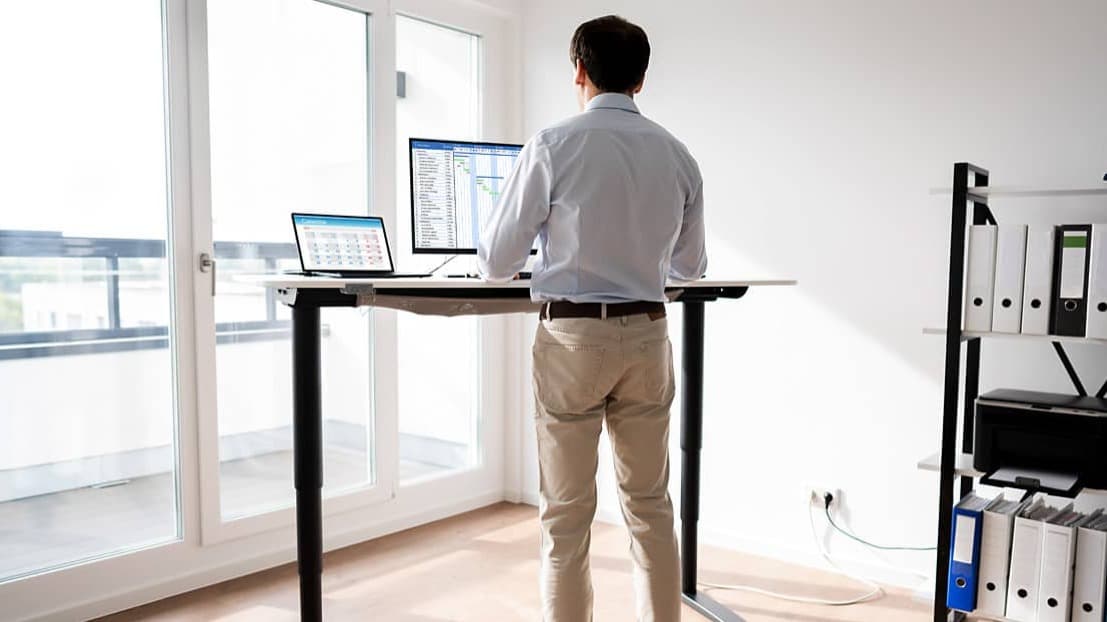
Standing desks were once seen as the ultimate startup cliché. If a founder had one, you automatically assumed they listened to productivity podcasts and drank suspiciously green smoothies. But now, standing desks are genuinely becoming mainstream in Indian offices too. Startups, coworking spaces, and even traditional corporate offices are redesigning workspaces around movement rather than permanent sitting. The goal is not to stand all day like a security guard outside a mall entrance. It’s to alternate between sitting, standing, stretching, and walking.
Research around sit-stand desks shows they help reduce sedentary time, improve posture discomfort, and even boost mood and engagement levels at work. One study found workers reduced sitting time by over an hour daily after using standing desk interventions. And honestly, the rise of standing desks feels very Gen Z-coded.
This generation is less obsessed with “gym body” culture and more interested in sustainable wellness. People want habits they can actually maintain without feeling like they’re training for an Avengers audition montage. Which is why treadmill desks, step-count flexes, and “walk while you work” routines are suddenly everywhere online.

Walking meetings sound like one of those LinkedIn trends people pretend to enjoy. But surprisingly, there’s actual science behind them. Research suggests walking meetings can improve creativity, focus, and conversational flow because movement increases blood circulation and cognitive engagement. Also, walking meetings somehow feel less awkward than conference room meetings where everyone aggressively nods while secretly checking Slack notifications.
There’s something psychologically different about walking beside someone instead of sitting across from them. Conversations become less formal, less robotic, and weirdly more honest. Which is probably why startup founders and creative teams love them so much.
It’s giving “Shah Rukh Khan giving life advice during a train scene” energy instead of “annual performance review where everyone uses the word synergy fifteen times.” And honestly, many office meetings do not need a conference room at all. Half the discussions happening in corporate India could easily happen while walking to get chai.
At least this way, people leave with ideas and extra steps.
The pandemic changed workplace fitness forever. Work-from-home culture removed whatever little movement people had left. Earlier, offices at least forced some activity. You walked to meeting rooms. During remote work, many people realized they could accidentally spend an entire day moving less than 1000 steps.
That’s basically houseplant behaviour! Bahaha! Research now shows remote workers often experience even higher sedentary time than office workers because digital communication removes physical movement from daily routines.
India is already dealing with rising lifestyle diseases among younger populations. Urban professionals in their twenties and thirties are increasingly reporting burnout, chronic back pain, poor posture, obesity, and early metabolic disorders.
The old idea that health only matters after 40 is collapsing very quickly. Which is why the future of office fitness may not actually look like fitness at all.
It might just look like people moving normally again. Just smaller, smarter movements throughout the day.
Maybe the future office will include walking zones instead of giant boardrooms. Maybe chai breaks will become wellness breaks. Maybe people will finally stop glorifying sitting at one desk for 12 hours straight like it’s a personality trait. And frankly, that sounds healthier than every gym membership we forgot to use after January. Toodlesss.
5 min read

5 min read

6 min read

6 min read
6 min read