
Why Indians Are Moving Money Out Of Fixed Deposits, And What They’re Putting It In Instead
4 min read

Authored By
JAJayant Singh
@jayant
You up your game? Do this.
For years, India followed one career formula like it was national policy. Study hard, get a degree, learn coding, crack placements, and settle into a stable corporate job. That formula worked for an entire generation. But right now, the ground underneath the job market is shifting faster than most people realise.
AI can already write code, generate presentations, analyse spreadsheets, edit videos, and automate customer support. Entire industries are being reshaped by automation, climate pressures, digital infrastructure, and changing internet behaviour.
I love you AI. Nikaah kar lijiye humse.
According to the World Economic Forum’s Future of Jobs Report 2025, nearly 40% of existing skills are expected to change by 2030 because of AI and technological transformation. At the same time, millions of entirely new jobs are expected to emerge globally.
But here’s the interesting part; the biggest opportunities in India may not come from the “obvious” careers everyone is chasing right now. Instead, they are likely to come from industries and skill combinations that still feel niche, technical, or even slightly boring today. And historically, that is usually where the biggest opportunities begin.
Right now, most people still think AI means using ChatGPT to finish assignments faster. (It is yaar) But globally, companies are already moving toward something much bigger called AI agents. These are autonomous AI systems capable of handling tasks like research, scheduling, customer support, operations, analytics, reporting, and workflow management with minimal human intervention. Major AI companies are increasingly investing in “agentic AI,” which many researchers believe could become the next phase of workplace automation.
This means future offices may no longer operate with only human employees. Instead, teams could include humans working alongside AI systems handling repetitive and operational tasks.
As a result, one of the most valuable future skills may not simply be coding, but managing AI ecosystems. People who understand how to supervise AI outputs, build workflows, combine tools, reduce errors, and strategically integrate AI into businesses will likely become extremely valuable across industries. And this will not remain limited to tech companies. Media firms, healthcare startups, banks, ecommerce platforms, educational institutions, and even agricultural businesses are expected to adopt AI-driven systems aggressively over the next few years.
The people who know how to work with AI instead of competing against it may end up having the biggest advantage.
Humans be like: Mai kya karun fir, job chhod doon?

Most people still do not talk about semiconductors with the same excitement as AI startups or content creation. But now, India is investing heavily in building its semiconductor ecosystem because global supply chains are changing rapidly.
Governments and companies worldwide are trying to reduce overdependence on China-centric manufacturing systems, especially after pandemic-related disruptions exposed vulnerabilities in global electronics production.
India’s semiconductor mission has already led to major investments in chip manufacturing, testing facilities, and electronics infrastructure. The government is also expanding specialised workforce training for chip design, embedded systems, fabrication, and semiconductor packaging.
This matters because semiconductors power almost everything now: smartphones, electric vehicles, defence systems, AI infrastructure, laptops, data centres, and industrial automation.
Over the next five years, India could see growing demand for:
VLSI engineers
embedded systems specialists
hardware designers
semiconductor researchers
automation engineers
and chip-testing professionals
Unlike overcrowded software sectors, semiconductor talent pools are still relatively limited in India. That gap alone could create enormous career opportunities.
Paisa hi paisa hoga?
India’s digital economy is expanding at an unbelievable speed. UPI payments, cloud-based businesses, digital healthcare systems, fintech startups, ecommerce platforms, and AI-powered services are becoming deeply integrated into everyday life.
But increased digitisation also means increased vulnerability.
Cyberattacks are becoming more sophisticated globally, and AI is now being used to automate phishing attacks, fraud systems, malware generation, and large-scale digital exploitation. According to multiple industry reports, cybersecurity talent shortages continue to remain severe worldwide.
Which means cybersecurity is no longer just an IT department issue. It is becoming a core survival requirement for businesses. Over the next five years, demand is expected to rise significantly for:
ethical hackers
AI security specialists
cloud security professionals
digital privacy consultants
cyber forensic experts
threat intelligence analysts'
The reason this field matters so much is because every industry is becoming technology-dependent. Even companies that are not “tech companies” still need digital protection. That makes cybersecurity one of the rare industries that feels both future-proof and recession-resistant at the same time.
The internet economy today runs on one thing above everything else; attention. This is why short-form video editors, meme strategists, social media researchers, and digital storytellers are suddenly becoming extremely valuable. But the real skill here is not basic editing. It is understanding audience psychology.
Modern internet platforms reward people who understand:
retention patterns
emotional hooks
algorithm behaviour
pacing
visual storytelling
digital culture
Especially in India, where cheap internet and regional-language content have created one of the world’s largest online audiences, the attention economy is growing rapidly. Brands are no longer competing only on products. They are competing for screen time.
Climate change is no longer a distant future problem for India. Rising temperatures, water shortages, agricultural stress, pollution, and extreme weather events are already affecting major parts of the country.
This is why climate-tech is slowly shifting from being a niche sector to becoming critical infrastructure. India’s push toward renewable energy, EV adoption, sustainable agriculture, and water conservation is expected to create major demand for people working in:
renewable energy systems
water analytics
EV infrastructure
smart irrigation
sustainability consulting
climate data systems
carbon accounting
People entering climate-tech today may be entering one of India’s most important future industries before it becomes mainstream. Save these climate techies to save the climate, bhailog.
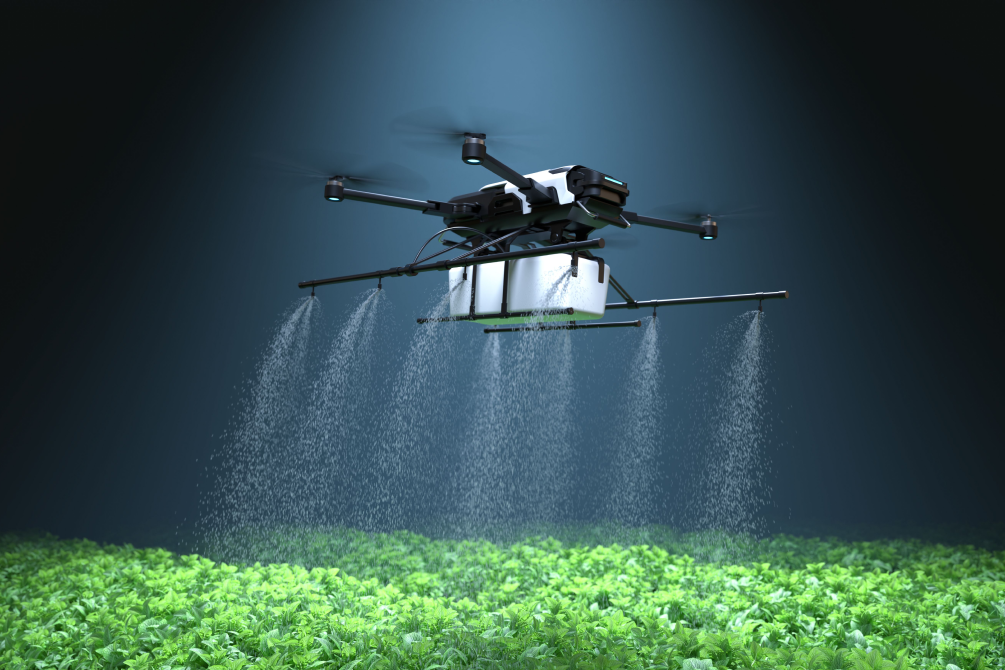
Agriculture still supports millions of livelihoods in India, but the sector is rapidly moving toward technology-driven systems. Future farming in India is increasingly expected to involve:
drone mapping
AI crop analysis
satellite monitoring
predictive farming systems
smart irrigation
automated soil analytics
This shift is especially important because climate pressures are forcing agriculture to become more efficient and data-driven. As a result, demand could grow significantly for:
agri-tech operators
agricultural drone specialists
AI farming consultants
smart irrigation experts
precision agriculture analysts
For a country with India’s agricultural scale, this sector has massive long-term potential. Yet compared to mainstream tech careers, it still receives surprisingly little attention. That may not remain true for very long.
AI is becoming increasingly capable of generating content, writing code, editing visuals, and automating repetitive work. But one thing technology still struggles to fully replicate is human behaviour itself. People still make decisions emotionally. They still respond to trust, identity, storytelling, aspiration, fear, humour, and belonging. (Ye human bhi badiya emo kaum hai). This is why skills related to:
consumer psychology
behavioural analysis
digital culture
audience behaviour
emotional storytelling
are becoming more valuable across media, startups, politics, marketing, and business strategy.
In a world flooded with AI-generated content, genuine human insight may become one of the rarest and most powerful competitive advantages. And honestly, that might be the biggest pattern connecting all future careers. The next five years will probably not belong to people who simply memorised technical skills. They will belong to people who understand how technology, infrastructure, climate, and human behaviour are evolving together.
Because the future of work in India is no longer about mastering one isolated skill. It is about becoming difficult to replace. Toodlessss.
4 min read

4 min read

5 min read

6 min read