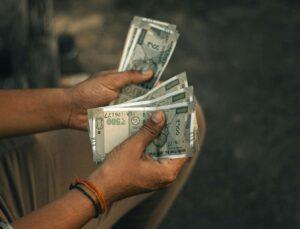




Idhar chala mai udhar chala, dekho girrrr gaya!
The Indian rupee crossing the ₹93 mark against the US dollar signifies a crucial juncture for the Indian Economy as it portrays not only immediate global shock but also long term structural challenges. The rupee depreciated more than 1% in a trading session for only the second time in four years, and closed the week at a decline of around 1.3%, marking the largest single weekly decline since late 2022.
Analysts believe that should the macroeconomic pressures remain unchanged, the rupee can potentially depreciate to a value of ₹95 against the dollar.
The recent depreciation in the rupee is not a singular issue; the speed with which the depreciation has occurred is unusual. The current depreciation of the rupee has been caused by multiple factors, all of which have compounded to create an environment of heightened anxiety and “WTH is happening” as a result.
Geopolitical tensions resulting from disruptions on energy supply routes such as the Strait of Hormuz contribute to the uncertainty, and create concerns that high oil prices are likely to remain for the near future. For a country such as India, which is one of the largest importers of crude oil in the world, the increase in crude oil prices results in an increase in the demand for dollars.
Market participants have indicated that continued demand for dollars by oil marketing companies is a contributing factor to the downward pressure on the value of the rupee.
The four major global crude oil price shocks have all occurred since early 2014 and are causing a significant impact on the rupee’s current and future value.
It is important to note that a stronger rupee against the dollar also indicates higher levels of foreign direct investment (FDI) into India.
This is part of a general “risk-off” attitude exhibited by global investors in periods of uncertainty, in which they typically move their capital to safer assets such as the US dollar, as the US dollar is currently the world’s premiere reserve currency.
The rising strength of the US dollar has compounded the depreciation of the Indian rupee. It typically appreciates during periods of uncertainty, as this asset represents a “safer” investment for now and for the foreseeable future. This has created additional pressure on the Indian rupee and other emerging market currencies.
A simple explanation for this relationship is that, as the strength of the US dollar increases, non-US currencies like the Indian rupee generally lose value. If there are increasing capital outflows and rising import prices associated with the current situation, the Indian rupee will typically lose value.
India has a trade imbalance; the country imports far more than it exports, particularly in the energy and electronics industries. This means that India is in a constant state of dollar demand. It follows, therefore, that when India’s trade deficit increases, particularly when oil prices are high, the Indian rupee will likely depreciate. At present, this is the condition being experienced, as increasing tariffs on imports are resulting in higher import prices, and simultaneous increases in dollar demand are occurring.
The current trade balance, along with capital outflows and increasing import costs, is likely to create further economic uncertainty related to the Indian rupee.
Graver Economic Ramifications
It is widely recognized that the depreciation of the Indian rupee has far-reaching implications for the overall economy.
Increased Inflationary Pressures
An increase in the value of currency creates increased costs of imported goods. Increased transportation costs translate to increases in the cost of basic necessities such as fuel. The combination of increased fuel prices, increased transportation costs, and increases in the prices of goods creates inflationary pressure on the economy.
Increased Levels of Volatility in the Markets
Movements in currency dynamically impact equity markets. While some sectors of the economy, such as IT and pharmaceuticals, benefit from the increased dollar-denominated revenues due to a depreciating rupee, other sectors of the economy, such as aviation and oil, are negatively impacted because of the increased costs they incur from the movements in currency. For these sectors of the economy, the movements in currency are a source of volatility.
Monetary Policy, Regulations, and Other Policy Considerations
The Reserve Bank of India currently monitors the ongoing volatility of the currency and, if the volatility exceeds acceptable levels, it will intervene via one or more of the following options:
1) Utilize Foreign Exchange Reserves,
2) Change Liquidity, and
3) Potentially implement additional Monetary Policy Measures to stabilize the currency.
Long-Term Trend of Depreciation
The current depreciation of the rupee is part of a longer-term pattern of continued depreciation. Over the last ten years, the rupee has continued to depreciate versus the dollar as follows:
2016: ₹67
2018: ₹71
2020: ₹74
2022: ₹82
2025: ₹90
2026: ₹93
The long-term trend of depreciation is the result of the same structural factors that affect all currencies, e.g., Differences in Inflation Rates, Trade Imbalances, and Global Capital Flows. In addition to the structural factors that have caused the long-term depreciation of the rupee, depreciation movements are also influenced by short-term movements that are based on immediate events (e.g., Oil Prices, Geopolitical Tensions, etc.).
Reddit got real, and really honest and disturbing (crying).
The humorous nature of some of the comments posted on Reddit has been significant, as one user summarized multiple years of volatility and price movements with the comment, “As the dollar falls, the rupee falls even more.”
In addition to the analytical aspect of the situation, many users have used humor to express their frustrations and reactions through cricket parallels. Haha what?
For example, one user stated that the rupee “is moving to 100 quicker than Rahul Dravid does to score a century.”
Another user simply commented: “Make it 100 ASAP.”
Ye dukh kaahe khatam nahi hota bhai?
In addition to the cricket references, many individuals’ comments on social media have included cultural references to movies, cartoons, and other forms of satire. For example, some individuals jokingly referenced the idea that the rupee may someday be “fixed” by a girl who loves red flags.
Aisa wala unhealthy relationship toh hum deserve nahi karte, babaji!