



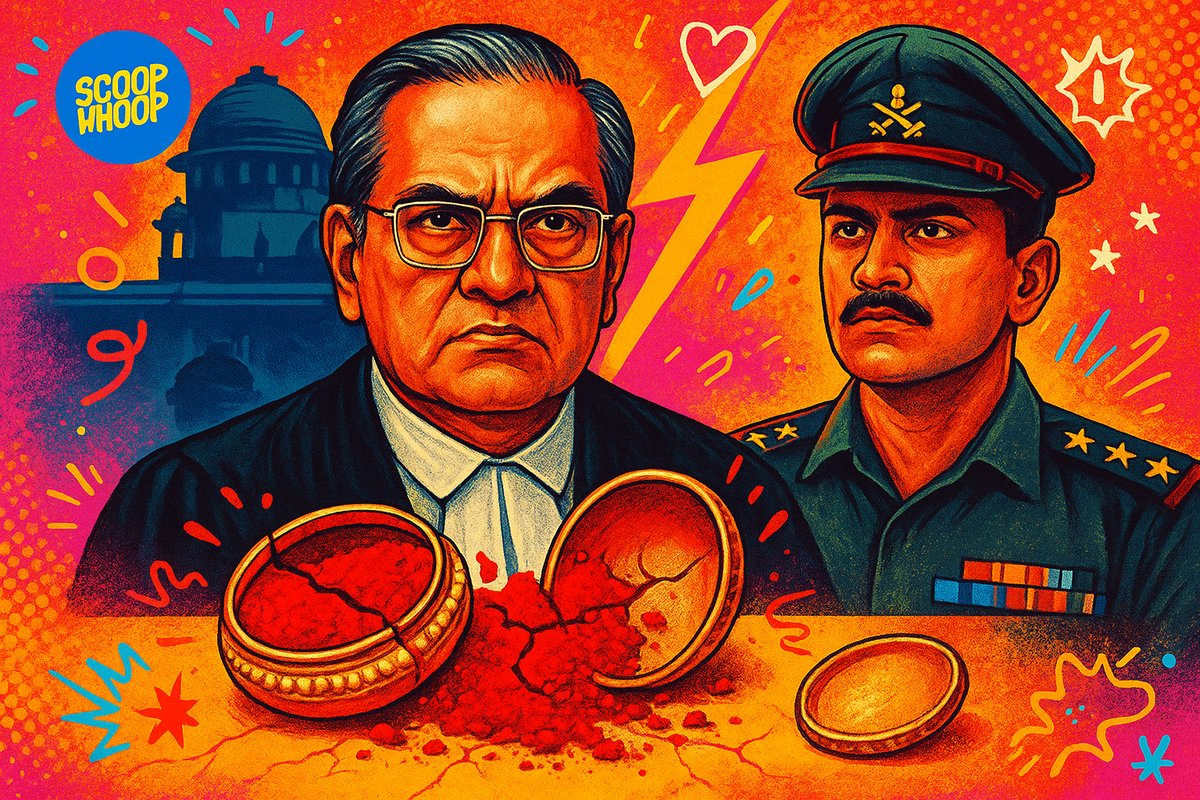
It’s not every day that the Supreme Court puts its foot down and says, “Boss, law is law, no exceptions.” But that’s exactly what just happened. The top court denied immunity to an army officer tied to Operation Sindoor in a dowry death case, and honestly, the nation is still picking its collective jaw off the ground. This isn’t just another ruling; it’s a big, bold reminder that medals and uniforms can’t wash away accountability. What does this mean for the rest of us? Time for a closer look.
1. So, Here’s What Actually Went Down
An army officer, once part of the razor-sharp Operation Sindoor squad, landed in trouble for his alleged role in a dowry death. Trying to find his way out, he argued that his military service granted him immunity from prosecution. The Supreme Court, channeling major no-nonsense energy, called a bluff and denied the plea, making it clear, no one is above the law, not even India’s defenders.
2. The Legal Precedent Set
This isn’t your usual court story. The Supreme Court’s ruling just drew a massive line in the sand: Uniforms don’t come with “get out of jail free” cards. The judgment underscores that everyone, be it the army, navy, or your neighborhood Sharmaji, is answerable to the same laws. Legal circles are buzzing, and the military’s now under the microscope for its members’ actions off-duty, with some riding high on the “justice for all” wave.. Makes you stop and think about where we draw the line between service and justice.
So here’s the bottom line: The Supreme Court has sent a clear message, service to the nation is epic, but it doesn’t grant immunity from law. This case isn’t just a headline; it’s a new chapter in how we talk about accountability, power, and justice in India. What’s your take?