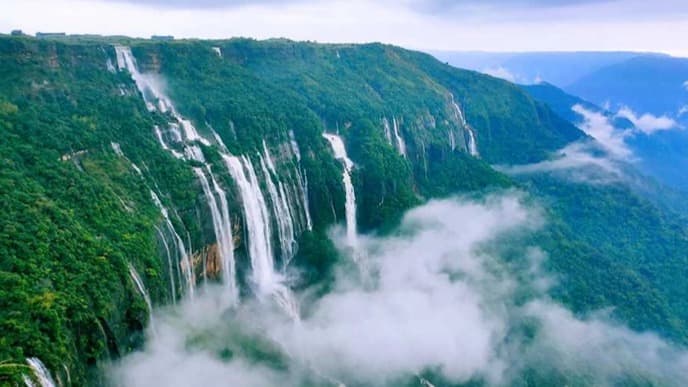
Northeast India Road Trip Guide That Should Be More Famous Than It Is
7 min read
Authored By
JAJayant Singh
@jayant
No need to fly Indigo. Take Indian train, see waterfall and ocean.
If your idea of travelling across India has always been Indigo boarding calls, overpriced airport sandwiches, and pretending turbulence does not scare the life outta you, then Indian trains are about to completely alter your personality. Bahahah!
Because the second you swap a flight for a long-distance train journey in India, something changes. You stop rushing, you start noticing things. Because yeah yeah, flights show you distance, but trains show you the country! And honestly, nowhere in the world does rail travel feel as emotional, cinematic, beautiful, and alive as it does in India.
From Himalayan toy trains and monsoon routes through the Western Ghats to sea bridges and Kashmir valleys, these are the train journeys that genuinely deserve main-character energy.
Spoiler alert: the Kalka-Shimla Railway is not just a scenic route!
Built in 1903 during British rule, this UNESCO World Heritage railway climbs from Kalka in Haryana to Shimla through the lower Himalayas of Himachal Pradesh. The journey covers roughly 96 kilometres, but what makes it legendary is the engineering. The route passes through 103 tunnels, 969 bridges, and more than 900 curves.
And yes, the famous Barog Tunnel is real. At over 1.1 kilometres long, it is the longest tunnel on the route and has an entire ghost-story lore attached to it because Colonel Barog, the British engineer supervising it, reportedly died by suicide after a surveying mistake.
The train slowly snakes through stations like Dharampur, Solan, Kandaghat, Taradevi, and Summer Hill before finally entering Shimla. Most stations still look frozen in the colonial era with old station boards, tiny tea stalls, and mountain fog drifting across the tracks. The best section of the ride begins after Solan, when the pine forests start getting denser and valleys suddenly open up beside the train.
If you book the Shivalik Deluxe Express, you get large windows and cushioned seating, but honestly, even the ordinary toy train experience feels magical because the speed is so slow that you actually absorb the landscape. Winter turns the route into a snowy fairytale! Monsoon makes everything look aggressively green. And somewhere between tunnels and cedar forests, you understand why people romanticise train travel so much.
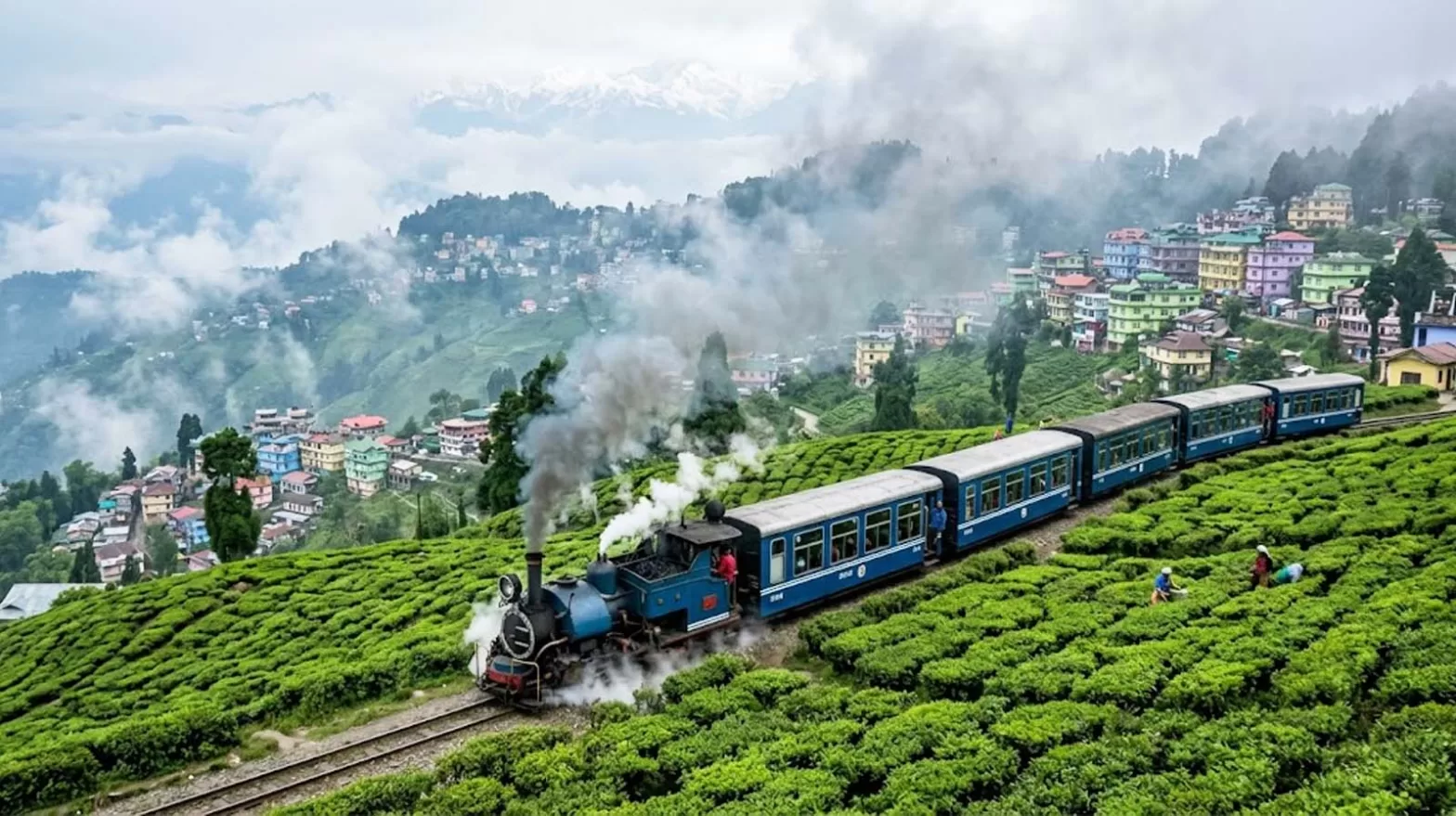
The Darjeeling Himalayan Railway, also called the Toy Train, is the sort of journey that makes you want to stop using your phone. Yea bruh, it’s serious!
This narrow-gauge railway begins from New Jalpaiguri and climbs all the way to Darjeeling through West Bengal’s tea country and Himalayan foothills. The altitude shift here is dramatic. The train rises from the plains to nearly 7,400 feet at Ghum Station, which is among the highest railway stations in India.
What makes this route iconic are the loops and zig-zags built to help the train climb steep mountain gradients. The most famous of them all is the Batasia Loop, where the train curves around itself with sweeping views of Kanchenjunga in the background on clear mornings.
The route passes through Sukna’s forests, Kurseong’s boarding-school hills, Sonada’s monasteries, and Ghum’s fog-covered ridges before entering Darjeeling. There are moments when the train literally runs beside markets and homes so closely that it feels like it is travelling through people’s living rooms. (in a very non creepy way). And the sensory details here are elite!
If Indian train journeys had fandoms, the Konkan Railway would probably have the loudest one.
Stretching along India’s western coastline, the Konkan Railway connects Maharashtra, Goa, and Karnataka through some of the most dramatic landscapes in the country. The route includes over 2,000 bridges and around 90 tunnels cutting through the Western Ghats. And during monsoon season, this route becomes absolutely unreal.
The Mumbai-to-Goa stretch especially feels straight out of a Sanjay Leela Bhansaali film. After crossing Panvel and entering the Konkan belt, the landscape transforms into endless green valleys, waterfalls pouring down cliffs, red-soil villages, coconut groves, and rivers swelling with rainwater.
The Ratnagiri section is stunning because the train repeatedly emerges from tunnels into giant open valleys. Near Karwar, you start seeing flashes of the Arabian Sea. Then comes the legendary Dudhsagar section near Goa. During peak rains, the waterfall crashes down the mountainside right beside the railway tracks, looking like somebody edited the scene for dramatic effect! (Ps: it was bhaagwaan ji)
Vistadome coaches on routes like the Jan Shatabdi and Tejas trains make the experience even crazier because of the glass roofs and panoramic windows.
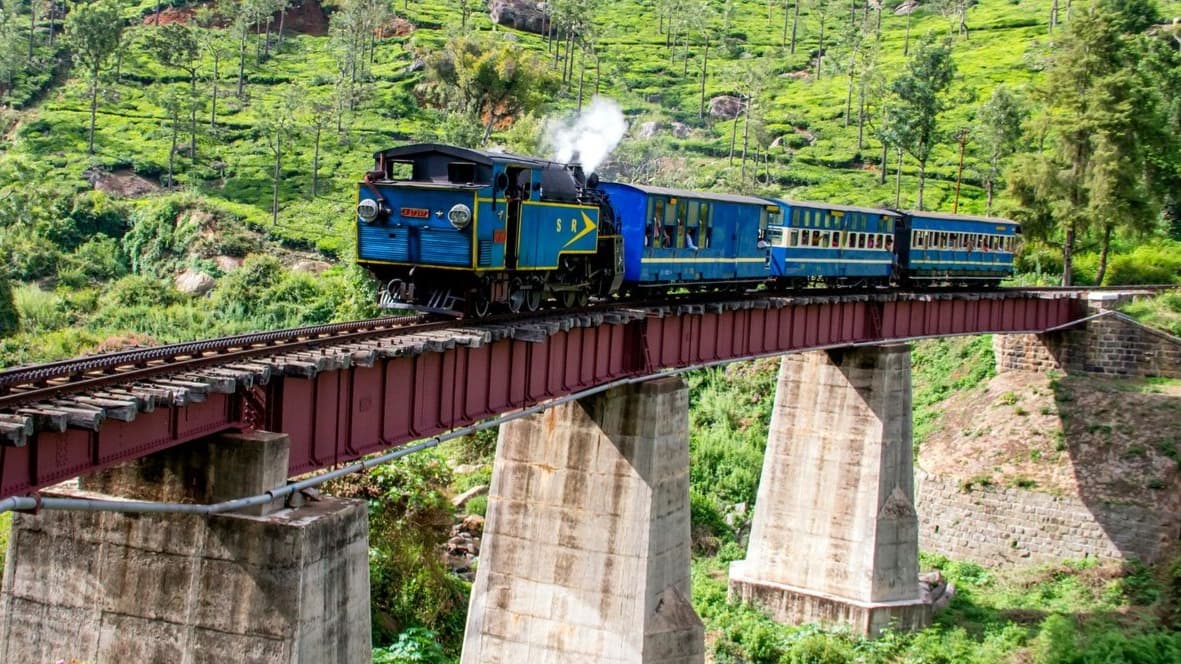
The Nilgiri Mountain Railway from Mettupalayam to Ooty feels less like public transport and more like a moving postcard.
This UNESCO-recognised mountain railway climbs through the Nilgiri Hills of Tamil Nadu using a rare rack-and-pinion system built specially for steep ascents. It is the only rack railway in India and among the steepest in Asia. The most beautiful part of the route is between Mettupalayam and Coonoor, where the train passes eucalyptus forests, tea estates, waterfalls, stone bridges, and deep valleys covered in blue mountain haze.
Stations like Hillgrove and Lovedale look straight out of another century. And yes, this is the same iconic blue train seen in countless Bollywood films!
The train moves slowly enough for you to hear birds, rainfall, and even the engine echoing through hills. During monsoon season, mist literally drifts into the train compartments. Ooty itself is charming, but honestly, the train journey is the real attraction.
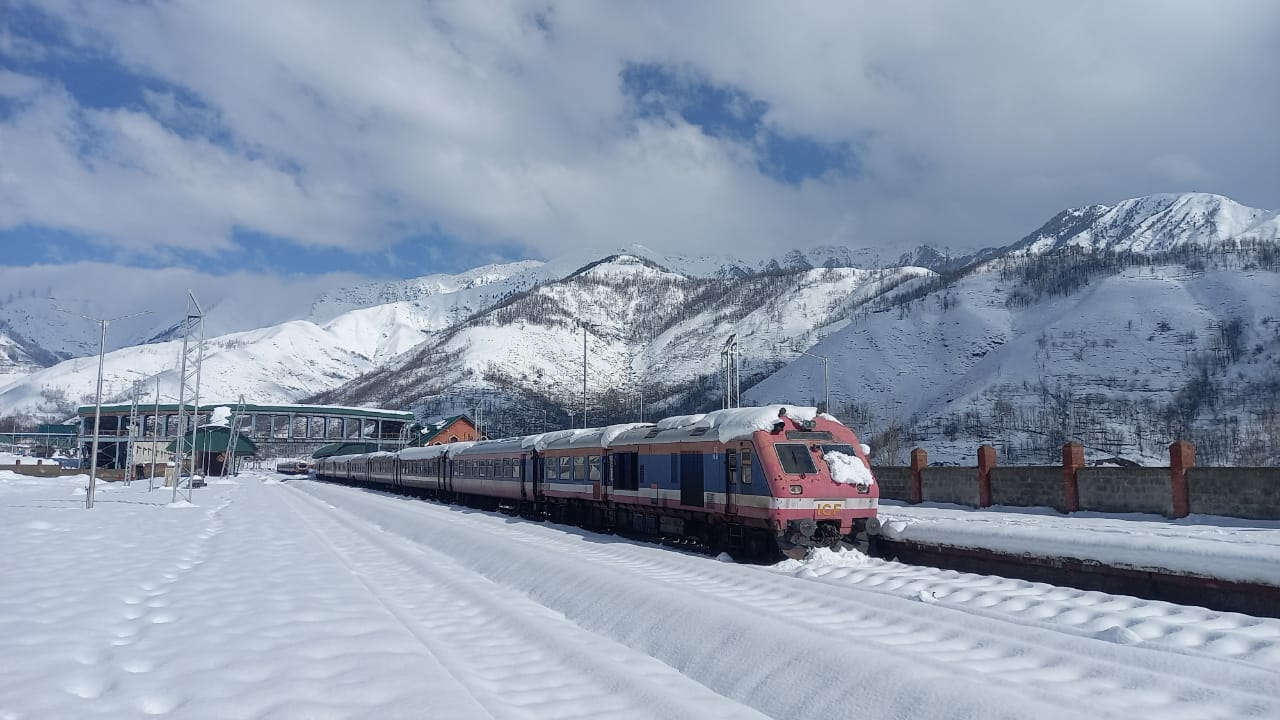
The Jammu-Baramulla railway route is probably the most ambitious railway project India has ever built.
Running through the Himalayas and Kashmir Valley, this railway crosses hundreds of bridges and tunnels through extremely difficult terrain. The route includes engineering marvels like the Chenab Rail Bridge, which is taller than the Eiffel Tower, and the Anji Khad Bridge, India’s first cable-stayed railway bridge.
The Banihal-Qazigund tunnel alone stretches over 11 kilometres through the mountains. But beyond engineering, this route is visually INSANE. Snow-covered peaks, Pine forests, Apple orchards around Sopore, Wooden Kashmiri homes, Rivers cutting through valleys; jo bolo woh milega bahaha!
During spring, the valley fills with blossoms and greenery. During winter, snow blankets stations like Banihal and Baramulla. The section between Srinagar and Baramulla especially feels peaceful in a way very few train journeys do.
You are not just seeing Kashmir here, you are slowly moving through it.
Crossing the Pamban Bridge by train is one of those experiences that stays in your head permanently.
The route towards Rameswaram passes through Mandapam before the train slowly enters the historic sea bridge connecting mainland India to Pamban Island. For a few surreal minutes, the Bay of Bengal stretches endlessly on both sides. Fishing boats float below. Sea winds slam into the train windows. And it genuinely feels like the train is gliding over the ocean.
The original Pamban Bridge opened in 1914 and became one of India’s most iconic railway structures. Sunrise journeys here are unbelievable because the water turns gold while fishing villages slowly wake up along the coast.
This route does not get talked about enough, which is honestly shocking!
The train from Visakhapatnam to Araku Valley climbs through the Eastern Ghats of Andhra Pradesh, passing coffee plantations, waterfalls, dense forests, deep valleys, and more than 50 tunnels. The journey begins near the Bay of Bengal coastline around Vizag before slowly entering cooler hill landscapes.
The Kirandul Passenger and Vistadome coaches are especially popular because the glass windows make the valleys look even more dramatic. The best stretches come near Tyda, Borra Guhalu, and Shimiliguda, which used to be one of India’s highest broad-gauge railway stations.
Borra Caves nearby are also worth visiting because of their massive limestone formations and underground chambers.
Unlike some overcrowded tourist routes, Araku still feels peaceful and relatively untouched.
This Goa-to-Karnataka railway route becomes legendary during monsoon season because of one thing; Dudhsagar Falls.
The train from Vasco Da Gama to Londa climbs into the Western Ghats through forests, tunnels, bridges, and mist-covered hills before reaching the waterfall section near Castle Rock. And when Dudhsagar is in full flow during rains, the waterfall crashes down beside the tracks so dramatically that passengers literally crowd the windows to film it.
The forests around Bhagwan Mahavir Wildlife Sanctuary become intensely green during monsoon, making the entire route feel wild and cinematic. Even outside the waterfall section, the route remains gorgeous because the Western Ghats landscape constantly shifts between cliffs, forests, and deep valleys.
Everybody talks about Shimla, but yaar, not enough people talk about Kangra.
The Kangra Valley Railway runs from Pathankot to Joginder Nagar through the foothills of the Dhauladhar range in Himachal Pradesh. Unlike the more tourist-heavy Himalayan routes, this one feels quieter and more intimate. The train crosses tiny bridges over rivers like the Chakki and Beas while passing tea gardens, pine forests, monasteries, and villages surrounded by snow-covered peaks in the distance.
Stations like Palampur, Baijnath Paprola, and Kangra Mandir are charming in a deeply old-school way. The views become especially beautiful around sunset when the Dhauladhar mountains turn pink and gold. The view enjoys the golden hour more than any influencer ever must have! Bahaha!
Train journeys through Kerala feel different from the rest of India because the landscape never stops changing.
The coastal railway stretch from Kasaragod to Thiruvananthapuram passes through backwaters, estuaries, coconut forests, fishing villages, paddy fields, churches, mosques, and endless greenery. Near Alappuzha and Kollam, the tracks run close to Kerala’s famous backwaters where houseboats drift slowly through canals lined with palms.
Around Kozhikode and Kannur, you get flashes of the Arabian Sea. And somewhere between Ernakulam and Thrissur, the rain usually comes like drama, because Kerala monsoon weather has a flair for timing. This is not an adrenaline-heavy train route. Which honestly makes it one of the best long-distance train experiences in India. Toodlessss.
7 min read

6 min read
5 min read
5 min read