Train Travel Across India: A Complete Guide For People Who’ve Only Ever Flown
9 min read

Authored By
JAJayant Singh
@jayant
You corporate slave, go Goa, Zoom call on beach
A few years ago, carrying your office laptop to Goa would have sounded ridiculous. (It still is, mitron!) But really, vacations were supposed to mean switching off, ignoring emails, and pretending your boss did not exist for at least four days. Today, however, cafés in Himachal are filled with people attending Zoom meetings in hoodies, beach shacks in Goa have turned into coworking spaces, and entire friend groups are casually saying things like, “I am working remotely from Bir for a month.” Bahaha, crying!!!!
Somewhere between the pandemic, burnout culture, and the rise of remote jobs, India sumri me entered its workation era. At first, it looked like just another internet trend. Instagram was suddenly full of mountain-view desk setups, aesthetic morning routines, and reels of people typing dramatically beside the sea as if replying to emails had become a spiritual experience. However, beneath all the social media glamour, something much bigger started happening. Workation culture began reshaping Indian tourism itself!
Remote work existed long before COVID-19, but the pandemic normalised the idea that employees did not necessarily need to sit inside an office building to remain productive. Research on remote working patterns found that many employees increasingly preferred working from “third spaces” such as cafés, coworking hubs, temporary rentals, and public work environments instead of traditional offices or even their own homes.
Earlier, holidays existed separately from professional life. You travelled to disconnect completely. Now work and travel have merged into one strange hybrid lifestyle where people attend meetings in the morning and go trekking by evening.
Researchers studying digital nomadism describe this phenomenon as “work-life blending” instead of work-life balance. That phrase perfectly captures modern urban life. For many young Indians, work no longer has clear boundaries.
Your office follows you everywhere through laptops, phones, Slack (jaani dushman) notifications, and endless WhatsApp groups. Naturally, people started asking themselves a very logical question:
“If work is going to follow me everywhere anyway, then why exactly am I sitting in Gurgaon traffic for two hours every day?”
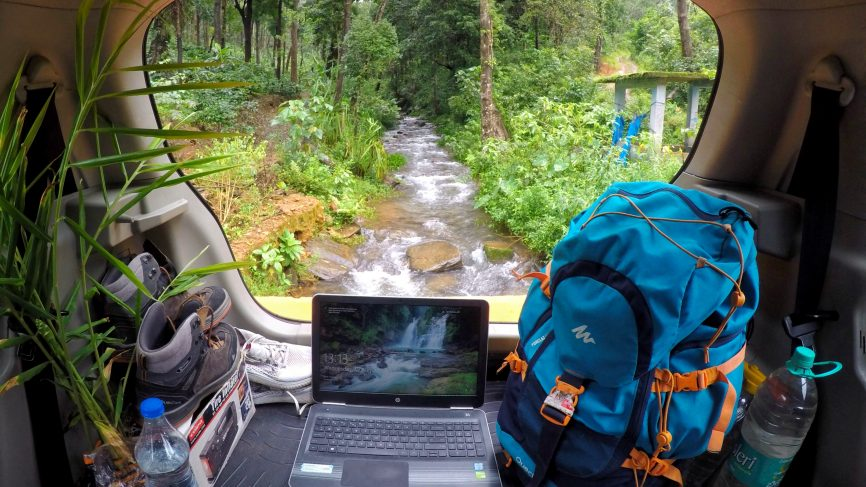
India’s geography, affordability, and rapidly improving internet infrastructure made it ideal for remote-work tourism.
Research on digital nomadism in India highlights that destinations combining affordability, lifestyle flexibility, culture, and decent connectivity are emerging as long-stay hubs for remote workers. That explains why places like Goa, Dharamkot, Bir, Pondicherry, Rishikesh, Kasol, and Manali suddenly became remote-working hotspots.
The financial aspect matters more than people realise. For many professionals living in expensive metro cities, staying in a peaceful mountain town for a month can genuinely cost less than surviving in Bangalore, Mumbai, or Gurgaon. Urban rents are rising constantly, daily commutes are mentally exhausting, and city life increasingly feels like a loop of traffic, deadlines, and overpriced coffee.
Workations offer an alternative fantasy! You still work, you still attend meetings, you still do RR about deadlines. However, you do it while looking at mountains instead of another concrete building. And for a generation already struggling with burnout, that emotional difference feels massive.
Traditional Indian tourism followed a predictable formula. Families woke up at unreasonable hours, rushed through packed itineraries, clicked photos at every famous landmark, argued about where to eat, and returned home more exhausted than before the vacation started. Workation culture completely changed that model.
People now travel slower and stay longer. Studies on digital nomad tourism show that remote workers increasingly prefer extended stays instead of short, rushed trips. This changes local economies significantly because long-stay travellers spend money differently from regular tourists. Instead of spending only on hotels and sightseeing, workation travellers spend continuously on cafés, grocery stores, scooter rentals, coworking spaces, gyms, laundry services, and monthly accommodations. That creates year-round business instead of seasonal tourism spikes.
In many tourist towns, cafés and hostels adapted quickly because they realised remote workers were not temporary customers anymore. They were semi-permanent residents with laptops. That is why hostels now advertise fibre Wi-Fi with the same enthusiasm they once advertised bonfires and trekking packages. The tourist became a temporary local.
No place represents this transformation better than Goa. Earlier, Goa symbolised beach holidays, nightlife, cheap alcohol, and chaotic group trips where at least one person inevitably lost their slippers and dignity somewhere near Baga Beach.
Today, parts of Goa feel like startup campuses but wait….with palm trees! Areas such as Assagao, Vagator, and Anjuna are filled with coworking cafés, creator communities, remote workers, wellness spaces, networking events, and people discussing freelance projects over oat milk coffee that somehow costs more than an actual meal.
Research on digital nomad communities increasingly identifies Goa as India’s strongest remote-work ecosystem.
Social media accelerated this transformation dramatically. Instagram turned the workation into a lifestyle aspiration. Suddenly, everyone wanted the mountain café setup, the beachside work reel, the “slow mornings” routine, and the aesthetic fantasy of escaping corporate life without actually quitting their job.
Work itself became aestheticised, and tourism marketing changed along with it. Destinations are no longer sold only through sightseeing or famous attractions. They are sold through “vibes,” café culture, wellness lifestyles, and the promise of emotional escape from city life.
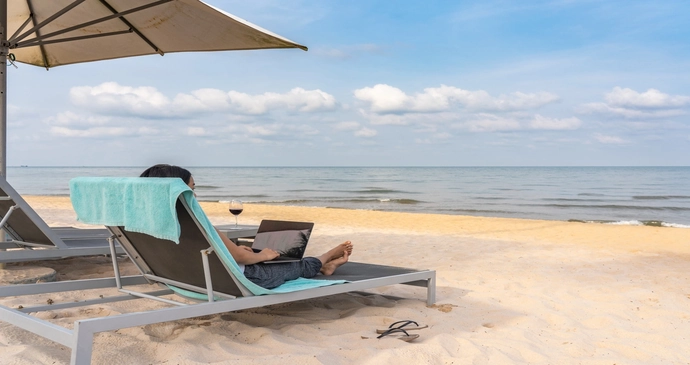
The internet makes workations look peaceful and glamorous. But ha ha ha, reality is more complicated. Researchers studying digital nomadism globally increasingly warn about issues such as housing inflation, gentrification, overtourism, and infrastructure pressure in tourist destinations.
India is beginning to experience early signs of these problems. When remote workers earning metro-city salaries move temporarily into smaller towns, they can often afford much higher rents than local residents. Naturally, landlords start converting properties into Airbnbs and short-term rentals because the profits are better.
Over time, this raises housing costs and changes local neighbourhoods. The same thing happened internationally in places such as Bali, Lisbon, and Chiang Mai. India is now entering a similar phase, although in a far more chaotic desi way.
Infrastructure is another major concern. Most hill stations and coastal towns were designed for temporary tourists, not thousands of long-stay remote workers using water, electricity, roads, internet services, and local resources continuously for months. Many Himalayan regions already struggle with overtourism, waste management, water shortages, and environmental pressure. Workation culture adds another layer to that strain.
Ironically, people travel to peaceful places searching for balance and then unintentionally recreate urban pressure there too. So yeah, sometimes the healthiest part of travelling is simply existing somewhere peacefully without constantly performing the experience for social media.
Because at its best, a workation is not really about working from paradise. It is about trying to create a version of life where work stops feeling like something you constantly need to escape from. Toodlesss.
9 min read
7 min read
5 min read
5 min read